Is Plug-In Solar Legal in the UK? The 2026 Rules Explained
Plug-in solar became legal in the UK on 27 August 2026 under SI 2026/848. Here is what the 800W rules, certification and G98 notification mean.
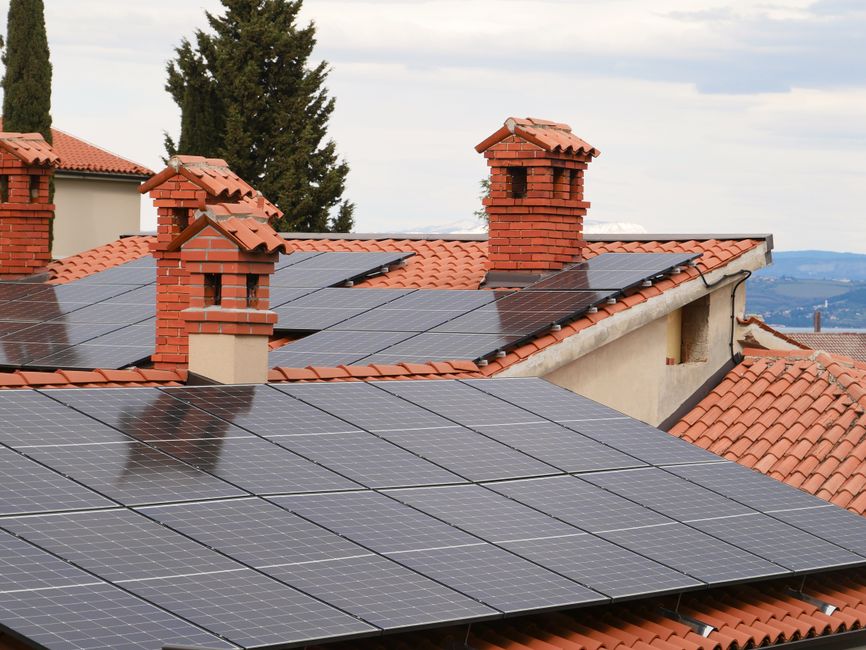
Whether plug-in solar is legal in the UK has a clear answer with an important date attached: since 27 August 2026 it is, under a new law called SI 2026/848. Before then, feeding solar power into your home through an ordinary plug socket sat outside the rules. The government confirmed the new route in its plug-in solar consultation, which set out how these systems are allowed to connect.
Is plug-in solar legal in the UK right now?
Yes, since 27 August 2026. UK plug and socket safety rules were never written with generation in mind, so a solar kit that pushes power back into a standard three-pin socket had no legal route - that is exactly what the 2026 reform changed. The new framework does not retroactively make uncertified imported kits legal: legality attaches to certified products, not to the date alone.
In practical terms, if you buy a random balcony solar kit and plug it in, you are not covered by the new framework. The sensible move is to understand the rules first, then buy a kit that is actually certified against the specification.
What changed on 27 August 2026?
On 27 August 2026, a statutory instrument known as SI 2026/848 came into force. It amended the Plugs and Sockets etc. (Safety) Regulations to create a new legal category: the plug-in microgenerator (a battery-free plug-in solar system designed to connect directly to a standard UK mains socket).
The reform allows an approved BS 1363 plug (the standard UK three-pin plug) to feed power from a compliant solar kit into your home's ring main. The headline limit is 800W of AC output, and this matters: the 800W is measured at the microinverter (the small unit that converts the panels' DC output into mains-compatible AC), not at the panels. A kit can carry a larger panel array behind an 800W microinverter.
What does the law actually say?
Most write-ups stop at "800W is now allowed". The instrument itself is short, and reading it answers the legal question more precisely than any summary. SI 2026/848 does two separate things.
It lets the plug exist. BS 1363 prohibits using a standard plug to connect a generating device to a socket. The amendment to regulation 8 of the Plugs and Sockets etc. (Safety) Regulations 1994 lets a notified body approve a plug for a plug-in microgenerator anyway, provided the plug conforms to BS 1363 in every other respect and complies with the Plug-in Solar Device Interim Product Specification. That change extends to the whole UK.
It puts a duty on whoever installs or operates the kit. Regulation 22 of the Electricity Safety, Quality and Continuity Regulations 2002 (the ESQCR) says no person shall install or operate a source of energy that can run in parallel with the network unless its conditions are met. Since 27 August 2026, one of those conditions is that a plug-in microgenerator complies with the Interim Product Specification - version 2, published by the Secretary of State on 16 July 2026. That duty is yours as the householder, not only the seller's.
Solar only.
It must generate electricity by converting sunlight directly into electricity.
800 watts AC, rated.
Its maximum rated alternating current output must not exceed 800 watts - a rating on the device, not a measurement of what it happens to produce.
Plug and socket.
It must be intended for connection to a low-voltage household installation through a standard plug and socket.
Grid-parallel.
It must be designed to operate in parallel with the distributor's network.
No charging from the mains.
It must not be designed to draw power from the household to store for later, beyond the control and auxiliary functions the specification permits.
Those five limbs are the legal definition of a plug-in microgenerator, written identically into both sets of regulations. A product that fails any one of them is not a plug-in microgenerator, whatever its box says, and the new route does not apply to it.
Is it an offence to use an uncertified kit?
It can be. Regulation 35 of the ESQCR makes any person who fails to comply with regulation 22 liable on summary conviction to a fine not exceeding level 5 on the standard scale. Installing or operating a plug-in kit that does not comply with the Interim Product Specification is a failure to comply with regulation 22(1)(c).
That is the legal exposure, not a prediction of enforcement. In England and Wales a prosecution under these regulations can only be brought by or on behalf of the Secretary of State or the Director of Public Prosecutions, under section 29 of the Electricity Act 1989. The practical risks are more ordinary: an insurer asking whether the equipment that caused a fire was lawful, a landlord or freeholder asking the same question, and a network operator asking you to disconnect.
Does the law apply in Scotland, Wales and Northern Ireland?
The electrical rules and the planning rules have different reach, so the answer depends on which you mean.
- The plug approval (the Plugs and Sockets Regulations change) extends to England, Wales, Scotland and Northern Ireland.
- The installation duty (the ESQCR change) extends to England, Wales and Scotland. The 2002 Regulations do not cover Northern Ireland, which has its own electricity safety rules that SI 2026/848 does not amend - a reader there should check with NIE Networks, Northern Ireland's network operator, before connecting a kit.
- The planning limits later on this page come from an order for England. Scotland, Wales and Northern Ireland run their own planning regimes.
What counts as a legal plug-in solar kit?
Legality is tied to the product, not just the date. A kit is only compliant if it meets the government's Interim Product Specification, which covers electrical design, the British plug requirement, mounting systems and fire protection. That specification uses the German balcony-solar standard (DIN VDE 0126-95) as a baseline, amended for UK conditions.
Two rules catch people out. First, the specification certifies a whole product - panel, microinverter, factory-fitted cable and plug, and mounting system as one tested unit. An inverter and panels you source separately do not qualify, however good the parts are. Second, a product cannot legally be sold until it appears on the ENA Type Test Register - the Energy Networks Association's public list of equipment type-tested as safe to connect to Britain's electricity distribution network. That register is the real signal of availability - and it is now filling up: the first plug-in solar certification was published on 18 August 2026, and trackers following the register were reporting roughly 40 compliant kits from about a dozen manufacturers by early September 2026.
How do you check a device on the ENA register yourself?
Because compliance claims on product pages are marketing and the register is evidence, the legal test comes down to one lookup. On ENA Connect Direct, search the generation-device database by the manufacturer's legal name rather than the retail name, and confirm three things: the record sits in the Plug-in Solar category, its registered AC capacity is 800W or less, and its compliance status is current. Note the date you looked, because a status can change after publication.
Our guide to which plug-in solar kits are certified in the UK walks through the search screen by screen and tracks which kits have reached the register.
Do you still need to tell anyone? (G98 and your DNO)
Yes. Even with a compliant kit, you (or your installer) must notify your DNO (Distribution Network Operator - the company that runs the local electricity cables to your home). The legal source is regulation 22(2) of the ESQCR: for a generator producing no more than 16 amperes per phase, the person installing it must ensure the distributor is advised of the intention to run it in parallel with the network before, or at the time of, commissioning. The engineering rule that implements this is G98, a 'connect and notify' process: you can commission the system and register it at the same time. G98 also sets the effective ceiling at 800W per household, and until it is formally amended that per-household cap is the practical limit regardless of how many panels you own.
What actually happens when you notify your DNO?
The notification goes to your distribution network operator, which is the company that owns the cables in your street, not your energy supplier. Most people have never knowingly contacted theirs.
For a device this small it is a notification rather than an application. You are telling them what has been connected, not asking whether you may. That distinction is why the process is described as connect and notify, and why there is no waiting period to sit through before you use the kit.
What the DNO does with it is the part worth understanding, because it explains why the step exists at all. The operator has to keep the voltage on your street inside legal limits, and its ability to do that depends on knowing how much small-scale generation is connected where. One 800 watt kit changes nothing. Several hundred of them on the same low-voltage feeder is a planning input for the network, and the register of notified generation is how that gets seen.
Skipping it is not a formality you can safely ignore. Notifying is the condition that excuses a small generator from having to agree specific requirements with the distributor under regulation 22, so a kit that was never notified does not meet that regulation, and regulation 35 makes a failure to comply with regulation 22 an offence. It can also complicate an insurance claim involving your electrics, and it makes the next section more likely rather than less.
Why might your inverter shut down even when everything is legal?
This is the failure mode nobody selling a kit mentions, and it has nothing to do with whether your setup is compliant.
UK mains is nominally 230 volts, and regulation 27 of the Electricity Safety, Quality and Continuity Regulations 2002 permits "a variation not exceeding 10 per cent above or 6 per cent below the declared voltage". That puts the legal ceiling at roughly 253 volts and the floor near 216.
Grid-tied inverters are built to that ceiling. To push power out, an inverter has to sit slightly above the voltage it sees on the network, and it must disconnect if the local voltage climbs past the statutory limit. So on a street where the supply already runs high, or on a long rural feeder, or on a sunny afternoon when several neighbours are all exporting at once, the voltage can reach the trip point and your inverter simply stops. It has not failed. It is doing exactly what the standard requires.
The practical signs are output that cuts out around the sunniest part of the day and returns later, or a kit that performs noticeably worse than a similar one a few streets away. The fix is not yours to make: persistent high supply voltage is the network operator's to investigate, and the notification in the previous section is what tells them your generation exists.
It is worth knowing before you buy rather than after, because it is the one thing that can make a fully legal, correctly installed kit underperform for reasons no product page will predict.
What can't you do under the new rules?
Mix and match components. Only a certified, factory-assembled kit qualifies - not self-sourced panels plus an inverter.
Extend the cable. The specification bans connecting the kit through an extension lead, multi-way adaptor or RCD adaptor - our plug-in solar safety guide covers the socket and RCD rules.
Mount it on unsafe surfaces. Installation is not permitted on ACM or MCM cladding, high-pressure laminate cladding, timber cladding, or timber balconies, for fire-safety reasons.
Add storage through this route. The legal definition of a plug-in microgenerator excludes anything designed to import electricity for later storage - plug-in batteries are a separate question.
Exceed 800W AC. Output above the cap moves you out of the plug-in route and into full grid-connection territory.
Where can you not install one?
Making a device lawful to plug in is a different question from being allowed to put it where you want it. Planning control sits on top, and for some properties it is the binding constraint.
Domestic solar falls under permitted development, set out in Part 14 of Schedule 2 to the General Permitted Development Order 2015, which covers both equipment installed on a dwelling (Class A) and standalone equipment within its curtilage (Class B). Permitted development means you do not need to apply, provided you stay inside the limits. From 27 August 2026 those limits are rewritten by the Town and Country Planning (General Permitted Development) (England) (Amendment) Order 2026, made on 29 July 2026, which also brings plug-in solar inside the regime for the first time.
Our guide to whether plug-in solar needs planning permission covers the application side. The situations where permitted development does not help you at all are the ones to know first:
Listed buildings
Permitted development is disapplied. You need planning permission, and separately listed building consent, which is a different application assessed on different grounds. This is the hardest of the restrictions to work around and the one most often discovered late.
Conservation areas and World Heritage Sites
Equipment must not go on a wall, balcony enclosure or roof enclosure that fronts a highway. A rear elevation or a garden position is usually fine; the street-facing frontage is the problem. Standalone equipment sited nearer the highway than the house faces extra restrictions and, in a conservation area, needs prior approval.
Scheduled monuments
Excluded outright rather than restricted.
Article 4 directions
A local authority can remove permitted development rights for a defined area. If one applies to your street, you need permission for something your neighbours two roads away would not.
Flats and leasehold buildings
Planning is only half of it. The lease and the freeholder typically control balconies, external walls and anything visible from outside, and no planning right overrides a covenant you signed.
What are the size and height limits since 27 August 2026?
Until now this page deliberately withheld the numbers, because the amending order had not been applied to the consolidated text and the version you would read might not be the version that governed your installation. The order has since been made and came into force on 27 August 2026, and its own text can be read directly, so the limits below are taken from the Town and Country Planning (General Permitted Development) (England) (Amendment) Order 2026 rather than from a summary of it.
These are limits you must stay inside to avoid needing an application. Exceeding one does not make the installation unlawful in itself - it means permitted development no longer covers it and you have to apply for planning permission. They apply in England; Scotland, Wales and Northern Ireland run separate planning regimes.
On the house, or a building in its garden (Class A)
- Panels on a wall
- Must not project more than 0.4m beyond the wall face - or 0.2m where that wall abuts a highway.
- Panels on a balcony or roof enclosure
- The same limits: 0.4m beyond the enclosure, or 0.2m where it abuts a highway. A roof enclosure includes a balustrade, railing or parapet.
- Panels on a pitched roof
- Must not project more than 0.2m beyond the roof slope, and no part may sit higher than the highest part of the roof. Chimneys are ignored for that comparison.
- Panels on a flat roof
- No part may sit more than 0.6m above the highest part of the roof, chimneys excluded.
- Conservation area or World Heritage Site
- Nothing on a wall, balcony enclosure or roof enclosure that fronts a highway.
- Listed building or scheduled monument
- Class A does not apply at all. That holds whether the listed building is a house or a block of flats.
- Plug-in solar on timber
- Not permitted on a wooden wall, balcony or enclosure, or on any part of the exterior clad in timber.
Free-standing in the garden (Class B)
- Height, 5m or more from the boundary
- Up to 4m from ground level.
- Height, within 5m of the boundary
- Up to 2m. Being close to the boundary lowers your allowance rather than being a requirement to meet.
- Height, within 5m of the boundary and in front of the house
- Up to 1m, where it sits forward of a wall forming the principal elevation. Where more than one row applies, the lowest limit governs.
- Height in a conservation area, nearer the road than the house
- Up to 2m.
- Panel area
- The panel surface area must not exceed 9 square metres in total. This cap is on standalone equipment only, not on panels fixed to the building.
- Prior approval
- Required before starting, for a conservation-area position nearer the road than the house, or an article 2(3) land position within 5m of the boundary.
- Listed buildings, monuments, World Heritage Sites
- Excluded within a listed building's curtilage or on a scheduled monument. On a World Heritage Site, excluded if within 5m of the boundary or nearer the road than the house.
- Plug-in solar on timber
- Not permitted on a wooden fence, gate, wall or other means of enclosure.
The timber restriction is the one to read twice, because it lands squarely on the installation most plug-in buyers have in mind. A balcony kit hung on a wooden balustrade, or fixed to a timber-clad wall or a wooden garden fence, is outside permitted development - and it is separately outside the product specification, which bans mounting on timber cladding and timber balconies on fire-safety grounds. Two different regimes reach the same answer, so there is no route around it: the mounting surface has to be something other than wood.
One transitional point. If a particular installation was permitted development immediately before 27 August 2026 and the new limits take it outside, you may still carry it out up to the end of 26 August 2027. That is a year of grace for work already contemplated under the old rules, not a general delay to the new ones.
Two honest caveats, because this is the part of the subject where confident internet answers are least reliable.
Read the order, not a summary of it. The limits above come from the amending order itself. Second-hand write-ups of this instrument get the 5-metre boundary rule backwards with some regularity, presenting it as a distance you must keep to rather than what it is - a trigger that lowers the height you are allowed. If a detail decides your installation, read the Town and Country Planning (General Permitted Development) (England) (Amendment) Order 2026 or ask your planning authority.
Not everything is development. Whether a plug-in kit engages planning at all depends on how it is fixed. A panel that stands freely on a patio and moves when you move is a different proposition from one bolted to a balcony balustrade. Where that line falls is fact-specific, and a two-minute call to your local planning authority costs nothing compared with taking something down.
Can renters and flat-dwellers use plug-in solar?
This is where plug-in solar earns its appeal. Because a compliant system is temporary and reversible - it clips on and unplugs, with no permanent structural change - it generally sits within permitted development rights, so it does not need planning permission in most cases. That makes it one of the few realistic solar options for people who rent or live in flats.
The practical catch is permission of a different kind: if you rent, you will usually need your landlord's consent, and leaseholders may need the freeholder's sign-off. The fire-safety mounting exclusions above also rule out some balconies. Our guide to plug-in solar for renters and flats covers no-drill mounting and what happens when you move.
What can you do now the rules are in force?
The commencement date changed what is lawful. It did not, by itself, put a compliant product in front of you - certification decides that, and certification has now begun.
Since 27 August 2026
- Plug a compliant kit into a standard socket
- Lawful, for a kit certified against the specification. Certified kits have been reaching the register since 18 August 2026.
- Use a kit above 800W AC output
- Still outside the definition. The cap is on the inverter's rated AC output, not the panel area.
- Skip the G98 notification
- No. Notification remains part of connecting generation in parallel with the network.
- Install on a listed building without consent
- No. Nothing in the socket rules touches planning or listed building consent.
- Assume a kit sold as UK-ready qualifies
- No. Check the type test register for that model rather than the product page.
- Add a plug-in battery on the same basis
- No. The interim product specification covers plug-in solar and expressly does not extend to plug-in batteries.
The honest summary is that the legal barrier is gone and the check that remains is product-level. The sensible sequence is to confirm a specific model on the register, check your own property is not in one of the restricted categories above, then buy - in that order, not the reverse.
It is also worth running the numbers before you commit: our guide to what plug-in solar can save on a UK bill shows how self-consumption drives the figure, and there are currently no grants for plug-in solar to offset the purchase price.
Can you actually buy a legal kit now?
Yes. The law taking effect and kits being on sale were two different milestones, and the second has now been reached: the first product was certified against the specification and listed on the ENA Type Test Register on 18 August 2026, and secondary trackers reported roughly 40 compliant kits from about a dozen manufacturers by early September 2026. The register has no public data feed, so treat any count - including this one - as a dated snapshot and check the current entry for the exact model before you buy.
The Interim Product Specification remains the standard a kit certifies against; a BSI product standard is still expected to provide the longer-term certification framework in due course. Uncertified kits remain on sale and remain outside the law, so the register, not the product page, stays the thing to check.
Frequently asked questions
Is plug-in solar legal in the UK in 2026?
Is it illegal to use an uncertified plug-in solar kit?
Does the plug-in solar law apply in Northern Ireland?
How many watts of plug-in solar can I have?
Do I need planning permission for plug-in solar?
Do I have to tell my electricity network?
Can I buy a legal plug-in solar kit yet?
Do I need planning permission for plug-in solar on a listed building?
Why does my solar inverter keep switching off on sunny days?
What does the DNO do with my G98 notification?
Sources
Every rule on this page traces to one of these primary sources. We re-check them each time we update the page - if you are making a decision that turns on a detail, read the original.
- SI 2026/848 - The Plugs and Sockets etc. (Safety) Regulations 1994 and Electricity Safety, Quality and Continuity Regulations 2002 (Amendment) Regulations 2026. Made 16 July 2026, in force 27 August 2026. This is the instrument that creates the plug-in microgenerator category.
- Regulation 22 and regulation 35 of the Electricity Safety, Quality and Continuity Regulations 2002 - the duty to comply with the specification and notify the distributor, and the offence for failing to.
- SI 2026/896 - The Town and Country Planning (General Permitted Development) (England) (Amendment) Order 2026. Made 29 July 2026, in force 27 August 2026. This is the planning-side instrument: it rewrites the Class A and Class B limits above, defines "plug-in solar", and folds it into the existing definition of solar PV.
- Plug-in solar: regulatory amendment and interim product specification (DESNZ) - the consultation, the government response, and the Interim Product Specification a kit must meet.
- ENA Connect Direct - the Energy Networks Association register of type-tested equipment. A kit has to appear here before it can legally be sold. You can search it yourself; it replaced the older ENA Type Test Register site in April 2024.
- Engineering Recommendation G98 (Energy Networks Association) - the connect-and-notify rule covering small generation, and the source of the 800W per-household ceiling.
- BS 1363 - the British Standard for the UK three-pin plug and socket, referenced by the Interim Product Specification.
Follow the plug-in solar rules as they bed in
We track the certification register and the rule changes so you know what is legal to buy and what is still not.