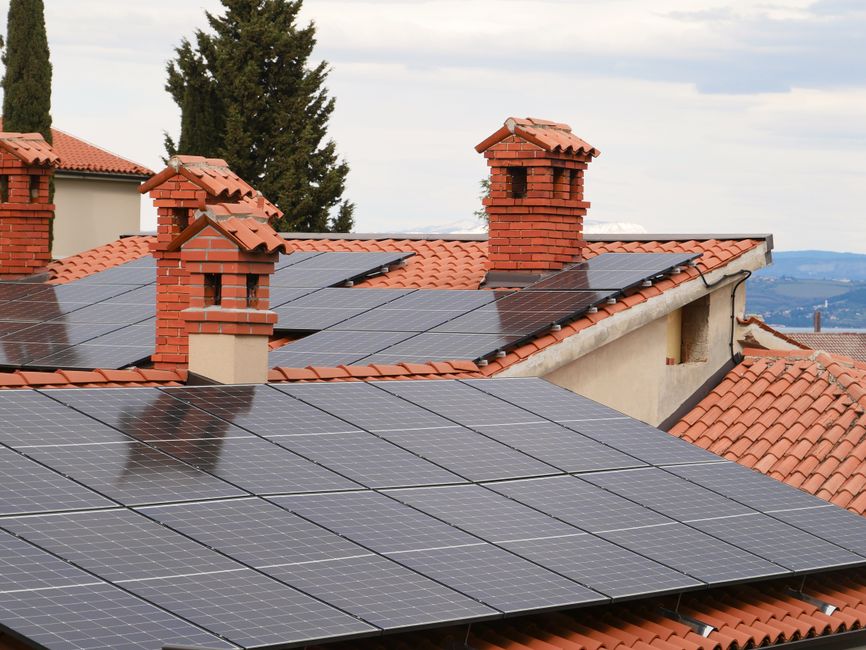
How Does Plug-In Solar Work? Microinverters & Sockets
Plug-in solar turns sunlight into mains power via a microinverter and a standard plug. Here is how the panels, inverter and 800W limit actually work.
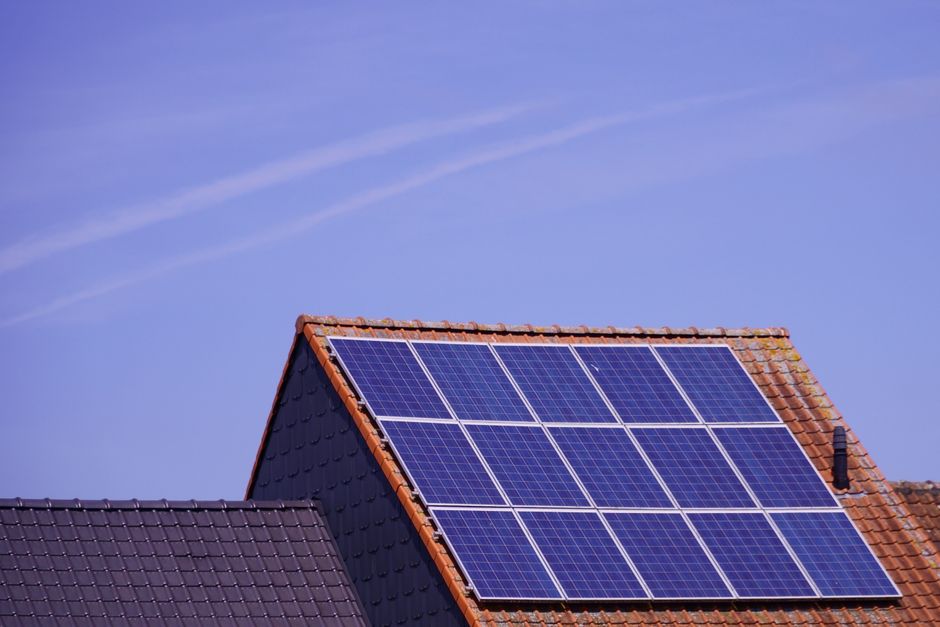
Plug-in solar (sometimes called balcony solar) works on a simple idea: generate electricity where you use it, and feed it straight into your home through an ordinary plug. The technology is well established - it is the same physics as a rooftop array, shrunk to a plug-and-play kit. What makes it new in Britain is the legal route that lets it connect, which the government set out in its plug-in solar consultation.
How does a plug-in solar system generate power?
Solar panels produce direct current (DC) when sunlight hits them. Your home, and the grid it connects to, runs on alternating current (AC) at 230 volts. So the raw panel output cannot be used directly - it has to be converted.
That conversion is the whole job of the microinverter (a small unit, usually bolted to the back of the panel, that turns DC into grid-matched AC). Once converted, the electricity travels down a factory-fitted cable to a standard plug, into a socket, and onto your ring main (the loop of wiring that feeds the sockets in a UK home). From there it behaves like any other power on the circuit: your fridge, router and other always-on devices draw it first, so you pull less from the grid.
What does the microinverter actually do?
The microinverter does more than change DC to AC. It also synchronises its output precisely with the grid's voltage and 50Hz frequency, so the power it injects blends seamlessly with the mains. And it carries a critical safety feature: anti-islanding. If the grid loses power - during a cut, or when an engineer is working on the line - the microinverter senses the dead line and shuts down within a fraction of a second, so it can never backfeed a circuit someone assumes is dead.
A microinverter differs from the single large 'string' inverter on a rooftop system: each panel (or small group of panels) gets its own, which makes plug-in kits modular and tolerant of partial shading. You can read more about the concept on Wikipedia's microinverter overview.
Why 800 watts, and where is it measured?
The UK rules cap a plug-in system at 800W of AC output. The key detail is where that is measured: at the microinverter's output, not at the panels. A kit can carry a panel array rated well above 800W of DC behind an 800W microinverter, because panels rarely hit their rated peak in real British conditions and the inverter simply limits what it pushes out.
The 800W figure comes from the grid-connection rule, G98 (the engineering recommendation that governs how small generators connect to the local network). Until G98 is amended, that 800W is a per-household ceiling.
Is plug-in solar safe to plug into a socket?
Safety is exactly why plug-in solar needed a new legal framework rather than a free-for-all. A compliant kit is designed around several safeguards: the anti-islanding microinverter, a proper earth and RCD/RCBO protection on the circuit, and a certified factory-fitted plug and cable. The rules deliberately ban connecting the kit through an extension lead, multi-way adaptor or RCD adaptor - the plug goes straight into a fixed socket on a sound circuit.
Only a certified, whole-product kit qualifies. That means the panel, microinverter, cable, plug and mounting system are tested and approved together, not assembled from separate parts. If you want the detail on what is and isn't allowed, see our guide to whether plug-in solar is legal in the UK.
What does a typical UK plug-in solar setup look like?
A typical kit is one or two panels, a microinverter, mounting hardware and a plug lead. The panels go somewhere sunny and south-ish - a balcony railing, a garden frame, a flat roof, an outside wall - and the lead runs to the nearest suitable socket. From 27 August 2026 it falls inside permitted development outright, because the 2026 amendment to the permitted-development rules adds plug-in solar to the legal definition of solar PV. That matters: it is covered by the same regime as any other domestic panel, with the same stated limits, rather than by an argument that it is too temporary to count. Being reversible is still what makes it realistic for renters and flats; it is just not the reason planning leaves it alone.
There is a mounting caveat for fire safety: the rules do not allow installation on certain cladding types or on timber balconies. The right surface for your kit is part of choosing one.
How much power will it produce?
Output depends on the panel rating, orientation, shading and the time of year, so a single headline number would be misleading. As a rough shape, an 800W kit in a decent south-facing spot generates a few hundred kilowatt-hours a year. The value you capture depends on using that power as it is generated - daytime loads like a fridge, home office or heat pump soak it up, whereas power you cannot use is effectively lost unless you have compatible storage. We break the economics down separately in our rules and savings guides.