Solar Battery Storage Explained for UK Homes
How home solar battery storage works in the UK: AC vs DC coupling, sizing in kWh, round-trip efficiency, 0% VAT, SEG export, and payback realities.
Solar battery storage is the missing half of most home solar setups. Panels generate electricity when the sun is up, yet a typical household draws most of its power in the evening, after everyone gets home. A battery bridges that gap, holding your midday surplus until the moment you would otherwise pay full price for grid power. This guide explains how home storage works in the UK: the chemistry inside the box, how it wires into your system, how to size it, and the tax and export rules that decide whether it earns its keep.
Why add battery storage to solar?
Without storage, every unit of solar you generate has to be used the instant it is made. Whatever your home cannot use in that moment is exported to the grid, and export pays far less than you pay to buy electricity back later. On a bright day an unattended home might use only 30 to 50 percent of what its panels produce, sending the rest out for a fraction of its value.
A battery flips that maths. It captures the surplus at midday and lets you spend it in the evening peak, when grid electricity is most expensive. In practice a well-matched battery lifts the share of your own generation that you actually use, your self-consumption, from around a third to 70 or 80 percent.
Storage also unlocks a second saving that has nothing to do with sunshine. On a time-of-use tariff you can charge the battery from the grid overnight at a cheap off-peak rate, then run the house on it through the pricier daytime hours. Plenty of UK batteries are bought as much for this arbitrage as for storing solar.
How does a home battery actually work?
A home battery stores electricity as chemical energy and releases it on demand. The core is a stack of lithium cells, a battery management system that protects them, and power electronics that move energy in and out. Capacity is measured in kilowatt-hours (kWh, the same unit your electricity bill uses); a 5 kWh battery holds roughly enough to run an average home through an evening, while 10 kWh covers most of a day's off-peak needs.
Two numbers matter more than the headline size. The first is usable capacity: manufacturers quote a nominal figure, but you can only safely draw down to a set depth of discharge (how much of the rated capacity you can use without harming the cells). Modern lithium batteries allow 90 percent or more, so a 10 kWh nameplate might give around 9 kWh usable. The second is the power rating in kilowatts, which caps how fast the battery can charge or discharge, and therefore how many appliances it can run at once.
AC coupling vs DC coupling: what is the difference?
Solar panels produce direct current (DC), but your home and the grid run on alternating current (AC). Where the battery sits relative to that conversion defines the two main wiring approaches.
With AC coupling (where the battery has its own inverter and connects on the mains side of your system), the panels' solar inverter makes AC as usual, and a separate battery inverter converts some of it back to DC for storage, then to AC again on the way out. It is the flexible, retrofit-friendly option: it bolts onto almost any existing solar array, or works with no panels at all. The trade-off is an extra conversion step, which loses a little energy each way.
With DC coupling (where the panels and battery share a single hybrid inverter), solar power charges the battery as DC before anything is converted, so it passes through fewer conversions and keeps a couple more percent of the energy. It is the neater, slightly more efficient choice, but it is best designed in from the start, because retrofitting it usually means replacing your existing inverter.
What size battery do you need?
Size the battery to what you can fill and what you can empty, not to the biggest number you can afford. Oversize it and you pay for capacity that sits half-charged; undersize it and you export surplus you could have kept.
Start with your evening and overnight electricity use, the hours a battery actually covers. A home using around 8 to 10 kWh a day often lands on a 5 kWh battery; heavier users, or anyone charging an electric car or running a heat pump, may justify 10 kWh or more. Then sanity-check against your solar: there is little point buying 13 kWh of storage if a small array only ever produces a 4 kWh surplus to charge it.
A useful rule of thumb is to match usable capacity to the electricity you typically use between sunset and sunrise. That way the battery empties most nights and refills most days, which is exactly the cycling pattern that makes storage pay.
What is round-trip efficiency?
No battery returns every unit you put in. Round-trip efficiency (the share of stored energy you get back after charge and discharge losses) is typically around 90 percent for a modern home lithium battery, so for every 10 kWh you store you might recover about 9 kWh. The missing energy is lost as heat in the cells and, especially, in the inverter's DC-to-AC conversions.
That loss is not a dealbreaker, but it belongs in your maths. If you charge a battery from the grid at an off-peak rate to dodge a peak rate, the round-trip loss quietly widens the price gap you need to make the switch worthwhile. When you compare quotes, treat any claim above roughly 95 percent with caution: real-world figures sit lower than the lab numbers on a datasheet.
Which battery chemistry: LiFePO4 or NMC?
Almost every home battery sold today uses one of two lithium chemistries. Lithium iron phosphate (LiFePO4 or LFP, a chemistry prized for thermal stability) has become the default for home storage. It is hard to overheat, tolerates thousands of charge cycles, and holds up well even when regularly run down to a low charge. Typical LFP cells are rated for several thousand full cycles, comfortably a decade or more of daily use.
Nickel manganese cobalt (NMC, the denser chemistry used in most electric cars) packs more energy into less space and edges LFP on efficiency, but it runs hotter, is more prone to thermal runaway if damaged, and usually carries a shorter cycle life. For a stationary box on a utility wall, where weight and size barely matter, LFP's safety and longevity win for most buyers. You can read the technical background on lithium iron phosphate cells on Wikipedia.
The practical takeaway: check the datasheet for the cell chemistry and the cycle rating, not just the kWh and the price.
Is home battery storage safe?
A properly installed, certified home battery is a low-risk appliance, but it is still a dense store of energy and deserves respect. The main hazard with any lithium battery is thermal runaway, a self-feeding overheating fault; LFP chemistry is far more resistant to it than the cells in phones and laptops, which is part of why it dominates home storage.
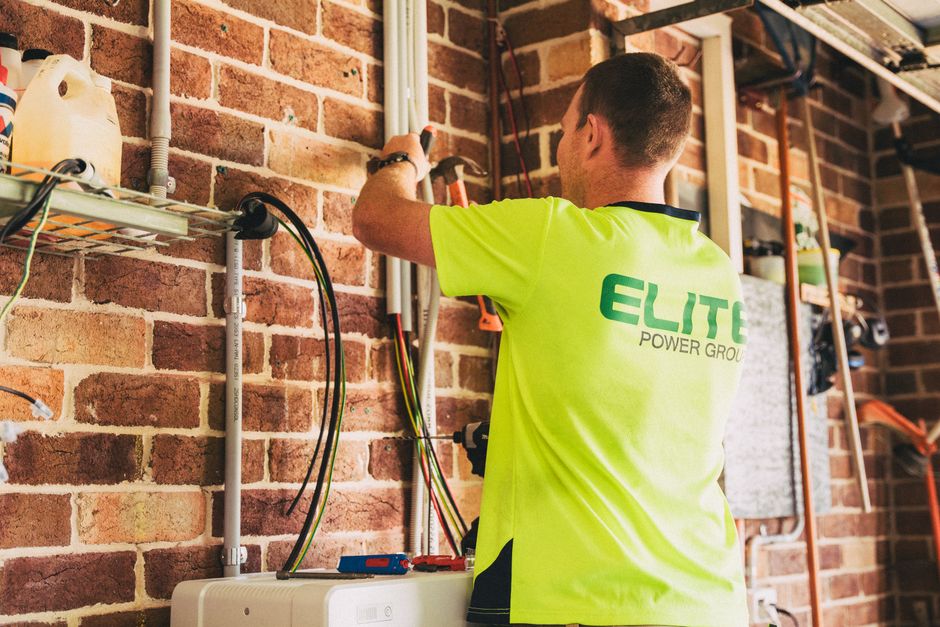
Safety comes down to three things: the cells, the battery management system that monitors them, and correct installation. A whole-home battery should be fitted by a competent, ideally MCS-certified installer, sited somewhere ventilated and clear of escape routes, and protected by the right isolation and circuit protection. Portable power stations carry their own protection built in, but the same principles apply: buy certified kit, keep it cool and dry, and do not cover it while charging. Our plug-in solar safety guide covers the socket and wiring rules that apply at the plug-in end of the market.
How does storage pair with plug-in and garden solar?
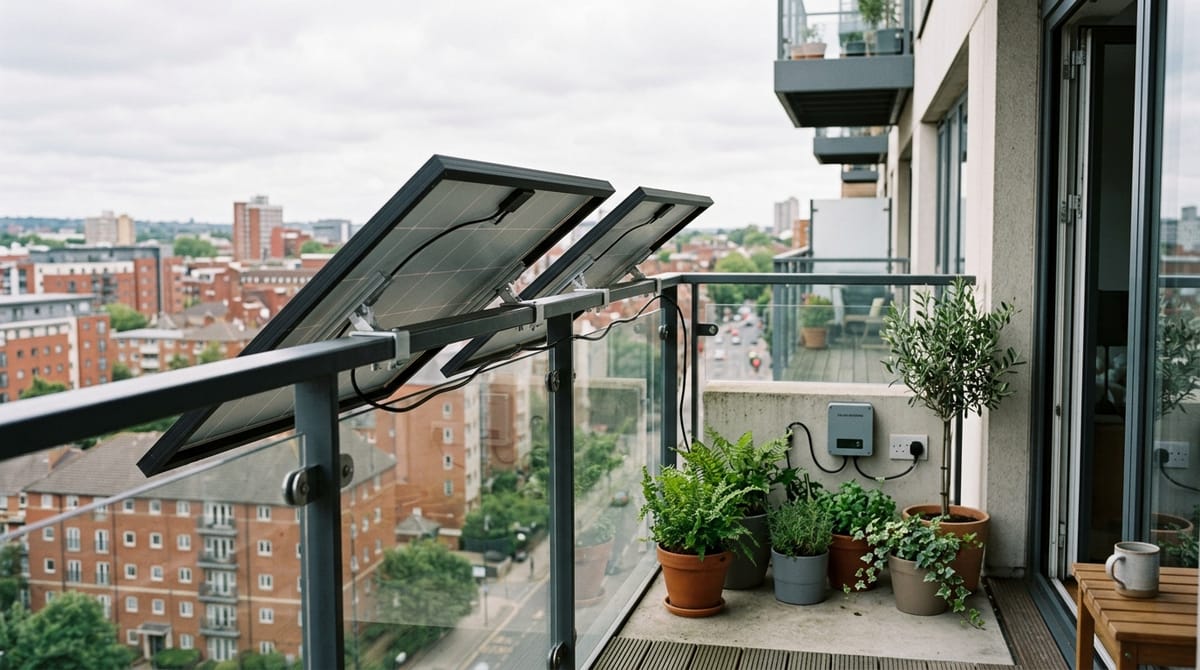
Storage and plug-in solar solve two halves of the same problem. A plug-in kit (a balcony or garden array that feeds the mains through an ordinary socket) generates its best output at midday, exactly when many homes are empty. Without somewhere to put that energy, it simply offsets whatever base load is running, the fridge and the router, and the rest is wasted.
Add a battery and the picture changes. The battery for this end of the market is usually a portable power station: a self-contained plug-in battery you charge from panels or a cheap-rate socket, then run appliances from in the evening. It needs no installer and moves with you, which suits renters and flats. Our guide to how plug-in solar works explains the panel-and-inverter side; a power station is the storage layer that sits behind it.
The scale is different from a rooftop system. An 800W plug-in kit, the UK output limit from 27 August 2026, produces far less surplus than a full roof, so pair it with a modestly sized power station rather than a 10 kWh wall unit. For the rules behind that limit, see our 2026 rule change explainer.
Do you pay VAT on a home battery?
Installed home battery storage is currently VAT-free in the UK. Since 1 February 2024, HMRC has zero-rated the supply and installation of electrical storage batteries in homes, whether fitted alongside solar panels, retrofitted to an existing array, or installed on their own to store cheap grid electricity. The relief is set out in HMRC VAT Notice 708/6 and runs until 31 March 2027, after which the rate is scheduled to return to the reduced rate of 5 percent.
One important distinction: the zero rate applies to storage that is installed as a supply-and-fit service. A portable power station you buy off the shelf as a standalone product is a normal retail purchase and carries standard-rate VAT. So the tax break rewards a fitted whole-home battery, not a plug-and-play box, which is worth factoring in when you compare the two routes.
How does storage interact with SEG and export payments?
When your solar generates more than your home and battery can absorb, the surplus goes to the grid, and the Smart Export Guarantee (SEG, the Ofgem-administered scheme that pays you for electricity you export) is how you get paid for it. Under the Ofgem SEG rules, larger licensed suppliers must offer an export tariff, the rate must always be above zero, and each supplier sets its own price rather than Ofgem fixing it.
Here is the tension a battery creates. Every unit you store and use yourself is a unit you do not export, and self-use is worth far more: you avoid buying grid power at around 25p per kWh, while flat export tariffs generally pay from the low single digits up to the mid-teens per kWh. So a battery deliberately shrinks your SEG income, and that is the point, because keeping the energy beats selling it. Some time-of-use export tariffs pay much more at peak, which is why a few battery owners deliberately discharge to the grid at those moments; but for most homes, self-consumption wins.
What is the real payback on a UK home battery?
Payback is where enthusiasm meets a spreadsheet. At the time of writing, a fitted home battery in the UK typically costs somewhere between roughly £4,000 and £6,500 for a 10 kWh system, or broadly £500 to £900 per usable kWh installed. Prices move, so treat these as a guide and get current quotes. Against that, the annual saving comes from the price gap between what you avoid paying and what you would have earned by exporting, multiplied by how much energy the battery actually cycles.
Do the arithmetic and paybacks of eight to twelve years are common for a battery bought purely to store solar, sometimes shorter where a cheap off-peak tariff lets the battery earn its keep every night regardless of the weather. That can sit inside a good LFP battery's warranted life, but it is rarely the quick win the marketing implies. The honest version: a battery improves a solar setup and adds resilience, but it is a long-term efficiency purchase, not a fast money-maker. For the full method applied to small systems, see our plug-in solar savings guide.
How to choose storage that pays
Match usable kWh to your evening and overnight use, not the biggest size you can afford.
Check the cell chemistry and cycle rating on the datasheet; LFP for longevity, not just the lowest price.
Budget for round-trip losses: you get back around 90 percent of what you store.
Decide AC vs DC coupling early. DC is neater from scratch, AC is easier to retrofit.
Remember installed storage is 0% VAT until 31 March 2027, but a shelf-bought power station is not.
Frequently asked questions
Do I need solar panels to install a home battery?
How long do home batteries last?
Is a portable power station the same as a home battery?
Can I charge a battery from an 800W plug-in solar kit?
Does a home battery actually save money?

Plug-in Solar in the UK: The Complete 2026 Guide
Plug-in Solar Savings: How Much Can You Save?

How Does Plug-In Solar Work?